Conferences
Monika Martišková on migration, AI and the future of the labour market at the Vision Slovakia 2040 debate
Nov. 17, 2026
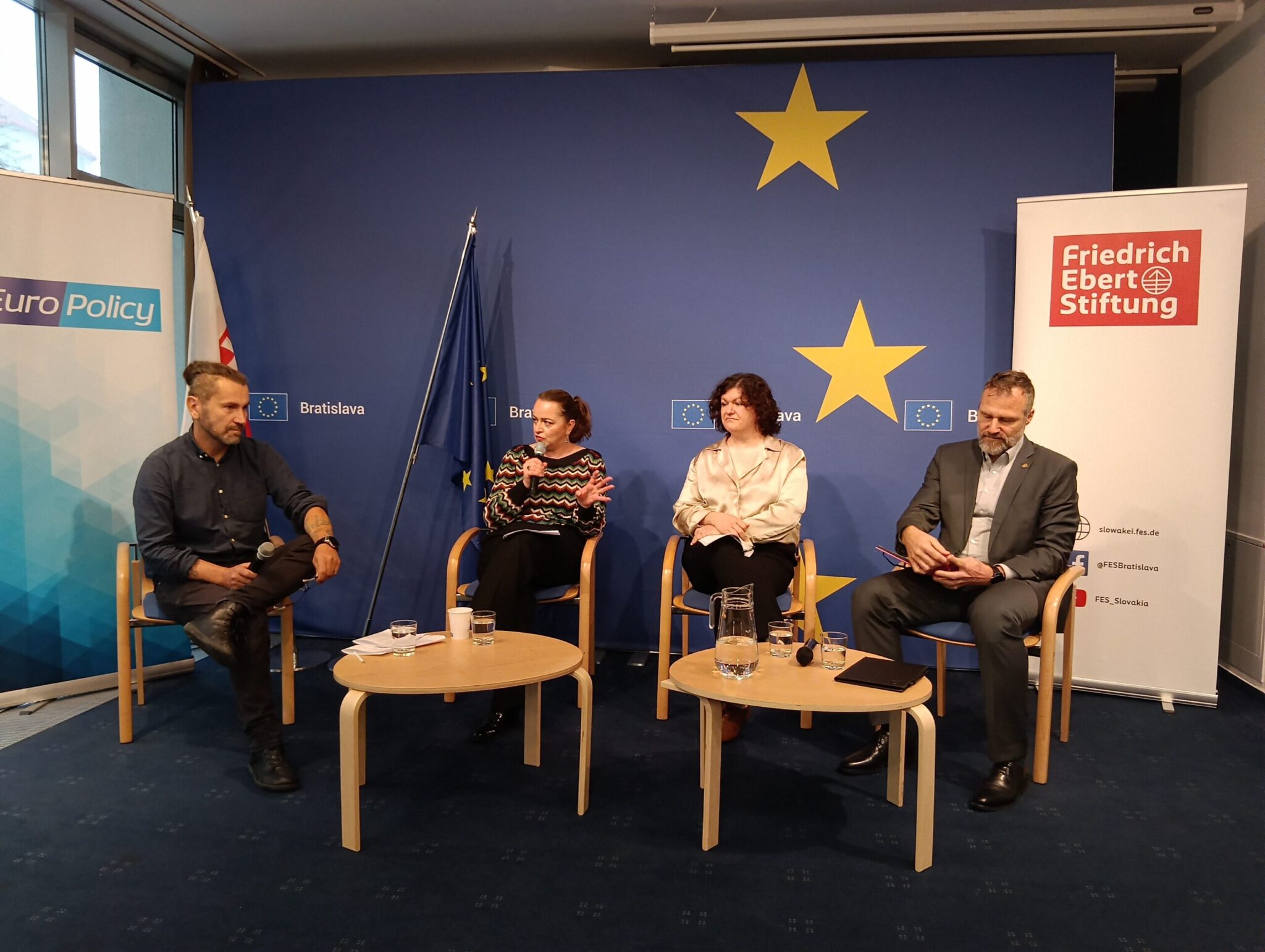
On 10 November, CELSI researcher and Deputy Director Monika Martišková took part in the debate “Vision Slovakia 2040 and the Future of the Labour Market”.
The civic association Europolicy organised it together with Friedrich-Ebert-Stiftung and euBrief.sk at the European Information Centre in Bratislava.
The debate looked at Vision Slovakia 2040, a strategic document prepared by more than 350 experts under the auspices of the Slovak Academy of Sciences, and what it means for the labour market.
Monika discussed it with Monika Uhlerová, President of the Confederation of Trade Unions of the Slovak Republic, and Miroslav Štefánik, Director of the Institute of Economic Research of the Slovak Academy of Sciences. The debate was moderated by Radovan Geist, publisher of euBrief.sk.
The panellists covered ageing, protecting people as they change jobs, productivity, migration and AI. They also answered many questions from an audience that included representatives of ministries and other organisations.
Monika began by noting that CELSI aims to speak about the situation in Slovakia based on facts, but also with a positive outlook. She pointed out that migration is not a one-way process.
According to analyses by government institutes based on administrative data, about half of the Slovaks who move abroad return within ten years, usually with higher wages. About a fifth of Slovak secondary school graduates leave to study abroad, mostly in Czechia, and around 40% of them come back.
At the same time, foreign students now make up 17% of students at Slovak universities, and 70% of them study in Slovak. However, only 25% of them stay in Slovakia after graduation, compared with an OECD average of 30%. In Monika’s view, easier access to long-term residence permits is an area where a relatively small change could have a large impact.
On AI, Monika noted that young people entering the labour market currently feel its impact the most. “When you use AI, it really is a junior colleague. What you would have needed from three junior colleagues, you may now need from just one,” she said. Even so, she sees AI above all as a tool for raising productivity and possibly changing Slovakia’s growth model.*
Asked where new jobs will come from, she pointed to the decarbonisation of the economy, especially renewable energy, heat pumps, the reform of district heating and building renovation. In her view, jobs will also remain in the automotive industry if Slovakia keeps its production capacity, including battery manufacturing.
Many thanks to Europolicy, Friedrich-Ebert-Stiftung and euBrief.sk for the invitation.
🔗 Listen to the recording of the debate (in Slovak) at: https://podcasters.spotify.com/pod/show/euractiv-podcasty/episodes/Vzia-Slovensko-2040-a-budcnos-trhu-prce-e3sfi7u
#CELSI #MonikaMartiskova #LabourMarket #LabourMobility #Migration #ArtificialIntelligence #GreenTransition #Demographics #Slovakia
Presentations:
Documents: